Journal · Guides
Sifnos travel guide: a complete companion for first-time visitors
How to reach Sifnos, when to come, what to eat, where to swim, and which villages to walk first. Written from years on the island.
There are louder islands in the Cyclades. Sifnos is not one of them. It is the Aegean at half-volume — limestone villages that catch the afternoon light, terraced hills that fall into the sea, and a culinary tradition older than most countries. We have lived parts of every year here for over a decade, and what follows is the guide we wish someone had handed us the first time.
This is not a list of attractions. It is the rhythm of the island, distilled.
Where Sifnos sits, and why it matters
Sifnos is one of the western Cyclades, between Serifos and Milos, about five hours by ferry from Athens. Seventy-five square kilometres, fewer than three thousand permanent residents, and a coastline of small bays rather than a single famous beach. There is no airport. There is no large port town. There are no chain hotels.
That absence is the point. Sifnos is what Mykonos was forty years ago, what Paros was twenty years ago, and what travellers who have grown tired of the obvious are quietly choosing now.
The island has its own gravitational centre — a high plateau called the Apano Meria, where five villages flow into one another along a four-kilometre walking path. From there, ravines drop down to harbours and beaches on the east coast (Kamares, Vathi, Faros, Platis Gialos) and to wilder, less reached coves on the north and west.
How to get to Sifnos
There is one way: by ferry. Either from Piraeus (the port of Athens, accessible in 25 minutes by metro from the city centre or from the airport via the X96 bus), or by island-hopping from another Cycladic port.
From Athens (Piraeus)
The high-speed ferry takes about 2h45, the conventional ferry around 5 hours. SeaJets and Aegean Speed Lines operate the fast route; Zante Ferries runs the slower, larger conventional vessels. Schedules are seasonal: in July and August there are three to four daily crossings, in May and October only one or two. Book ahead in summer — cars in particular fill up weeks in advance.
A good rule of thumb: if you are arriving with luggage and no children, take the high-speed and arrive by lunch. If you have a car or want the slower, calmer crossing with the deck café and the gulls, take the conventional ferry — it is part of the island’s mood.
From other islands
Sifnos is well connected to Milos (1 hour), Paros (2 hours), Serifos (35 minutes), Kimolos and Folegandros. The most beautiful island-hopping itinerary in the Western Cyclades, in our experience, is Athens → Sifnos → Milos → Folegandros, with three to four nights on each.
Once on the island
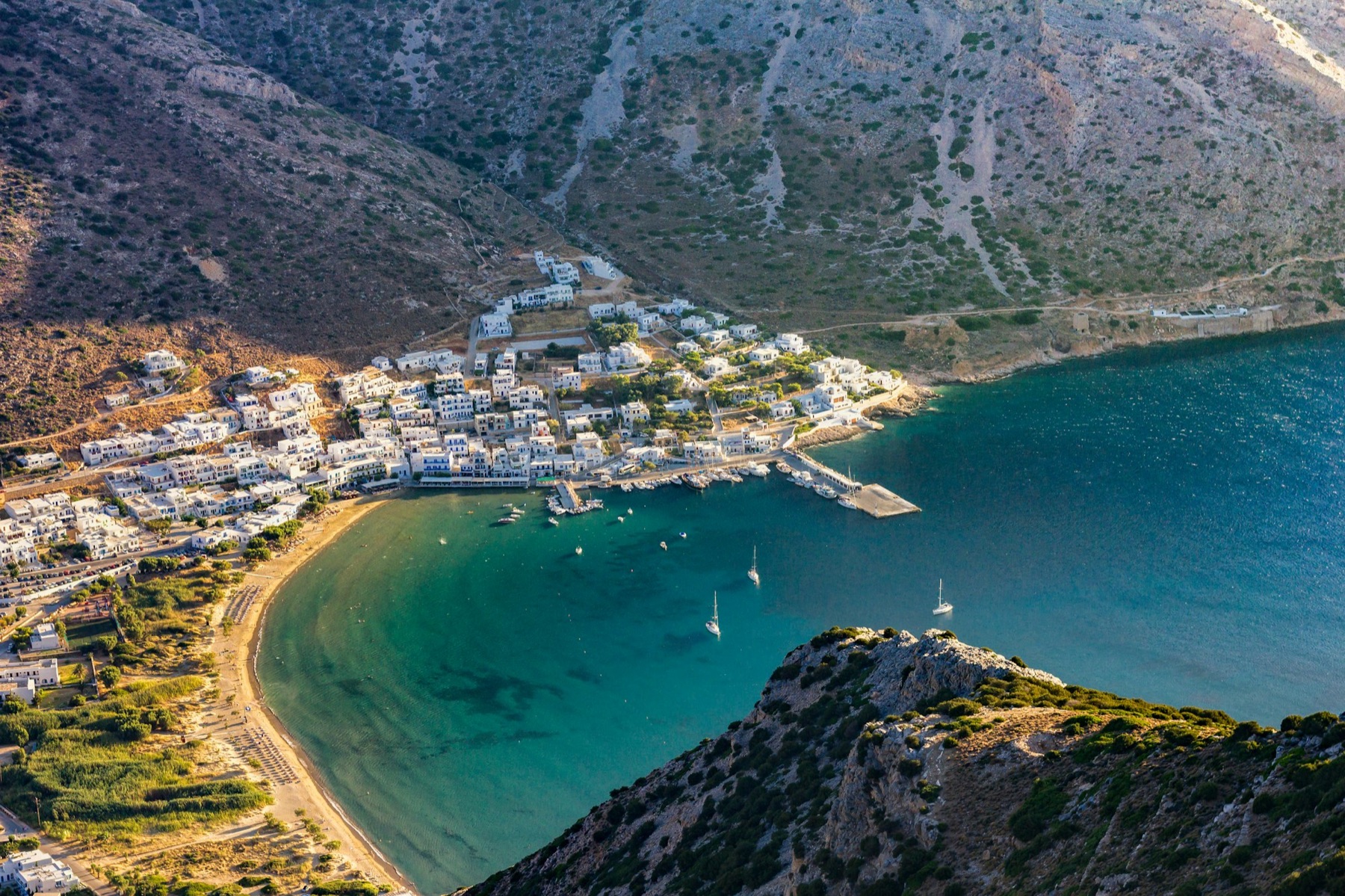
You will land at the port of Kamares — a horseshoe bay with tavernas along the quay and a bakery that has been there since before any of us were born. From there, you have three options:
- Rent a car at the port (essential if you want to explore beaches and northern coves freely; book ahead in July–August)
- Take the bus — surprisingly punctual, runs to all main villages and beaches every hour or so
- Be picked up — most accommodations offer a transfer; ours always does
For a deeper dive on schedules, ferry operators, prices and the practical details of the crossing, see our complete ferry guide to Sifnos.
When to visit Sifnos
Sifnos has a long season — from late April to early November — and the right month depends on what you are after.
May and June are arguably the best months. The island is in full bloom (oleander, bougainvillea, wild herbs everywhere), the sea reaches 21–23°C by mid-June, and the villages still belong to the Sifniots themselves. The light is golden but not yet harsh.
July and August are warm (28–32°C), busier, and brighter. This is when Greek families arrive, when the beach tavernas hum, and when the panigyria — the village saint-day festivals — happen one after another. Avoid the second half of August (Greek bank holidays) if you want quiet; embrace it if you want festival energy.
September is the secret. Sea at its warmest (24–25°C), days still long, evenings perfectly cool, and the whole island exhales after summer. This is when locals tell each other to come back.
October is for slow travellers. Some tavernas close, but the weather is still gentle, the colours of the light shift toward amber, and there is room to think.
Easter is its own category — the most beautiful time on the island, but a very different trip. We wrote a dedicated guide to Easter in Sifnos.
The villages: Kastro, Apollonia, Artemonas
Sifnos has more than twenty villages, but three deserve a half-day each at minimum.
Kastro is the medieval old capital, perched on a rocky outcrop above the east coast — narrow whitewashed streets, Venetian crests on the lintels, and the small archaeological museum in the central square. Walk the loop at the top of the village in late afternoon, just before the light goes amber. Lunch at To Astro for the views; dinner at Leonidas for the food.
Apollonia is the modern hub — the main square (called to steno) where everyone passes through eventually, the ceramic shops, the bookshop, the pharmacy. By day quiet, by night the gathering point.
Artemonas is the patrician sister to Apollonia — neoclassical mansions in pale ochre and faded blue, a quieter pace, the best bakery on the island (Theodorou), and a viewpoint above the village that looks out across the bay to Kimolos.
These three villages, plus the smaller Exambela, Katavati and Ano Petali, form a single long village along the high spine of the island. Walking between them — one hour end to end — is the single best walk on Sifnos. We described it in detail in our piece on the three villages.
The beaches
Sifnos has more than thirty beaches, from the long sandy crescents on the south coast to wild pebble coves on the north. A few of our favourites:
- Vathi — long, calm, shallow, perfect for families, with three excellent tavernas
- Cheronissos — the northernmost cove, a fishing village frozen in time, the freshest fish on the island
- Fykiada — reached by a thirty-minute walk from Vathi, no road, no taverna, no shade — bring water
- Platis Gialos — the longest sandy beach, busier but still beautiful, good for late lunch and a long swim
- Faros — a small fishing village with two tavernas on the quay and three beaches within ten minutes’ walk
We wrote a fuller bay-by-bay guide to the beaches and a separate piece on hidden coves for those who want to walk to them.
What to eat
Sifnos has a culinary identity stronger than almost any other Cycladic island. The local clay pots — tsoukalia — gave their name to the island’s most famous dishes, mastelo (lamb slow-cooked in a sealed clay pot with dill and red wine, served at Easter and on Sundays) and revithada (chickpea stew, slow-baked overnight in the village oven, traditionally eaten Sunday lunch).
Nikolaos Tselementes, the man who modernised Greek cuisine in the 1920s, was born here. We wrote a piece on his legacy and what it means to cook on Sifnos today.
The best meals on the island, in our experience, are taken in three places: at the harbour tavernas at sunset (Cheronissos, Faros, Vathi), at the Sunday lunch of a village taverna (Leonidas in Kastro, Mama Mia in Artemonas), and in the back room of a panigyri, where the food is communal and the wine is poured straight from the barrel.
For specific addresses: our guide to where to eat.
Pottery, monasteries, and the things that make Sifnos itself
Three traditions still define daily life here:
Pottery — Sifnos has been a clay-working island for two thousand years. Three workshops still throw wheel-spun tsoukalia by hand: Antonis Kalogirou in Vathi, Yiannis Atsonios in Apollonia, and the Lembesis family in Kamares. We wrote about the pottery tradition.
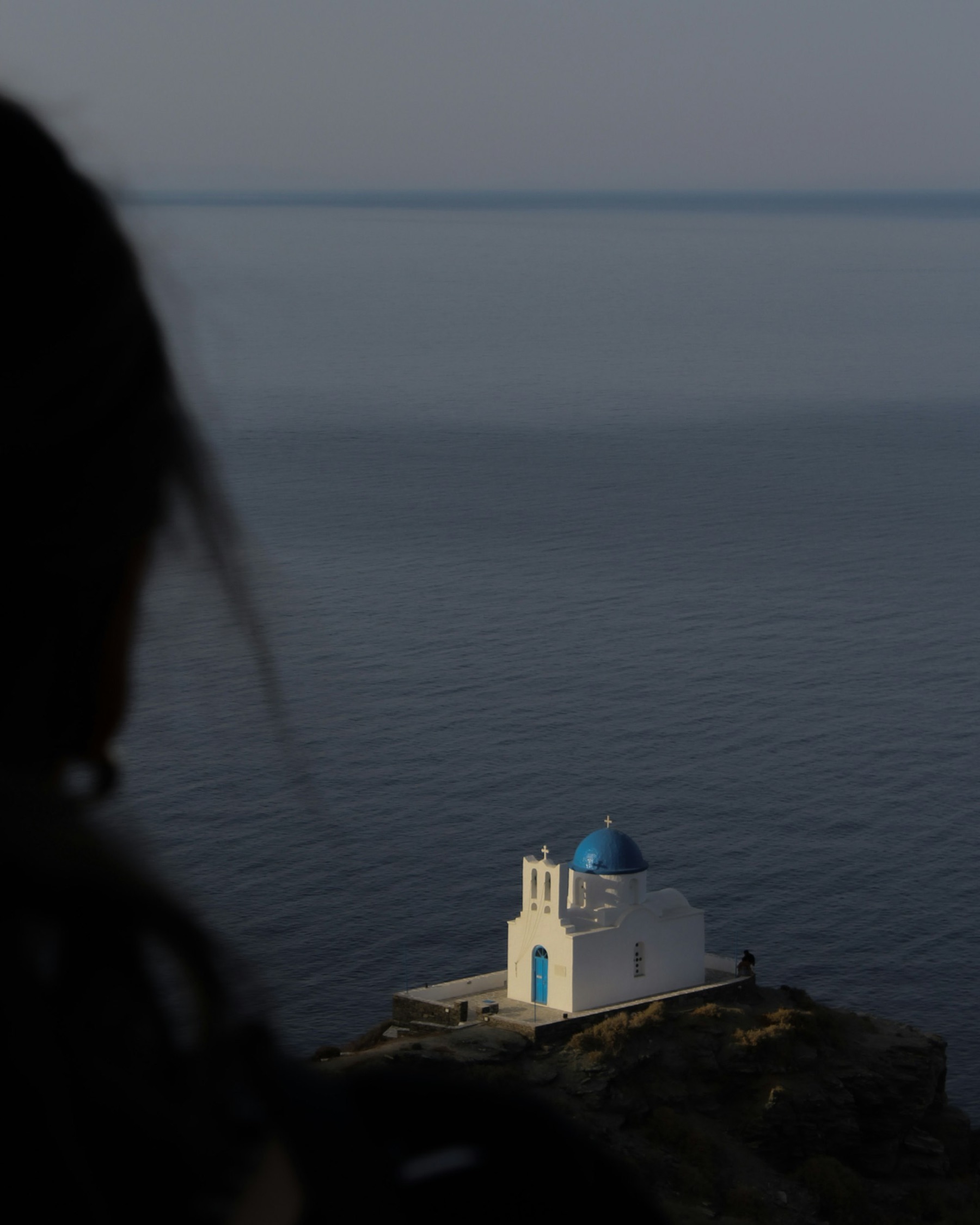
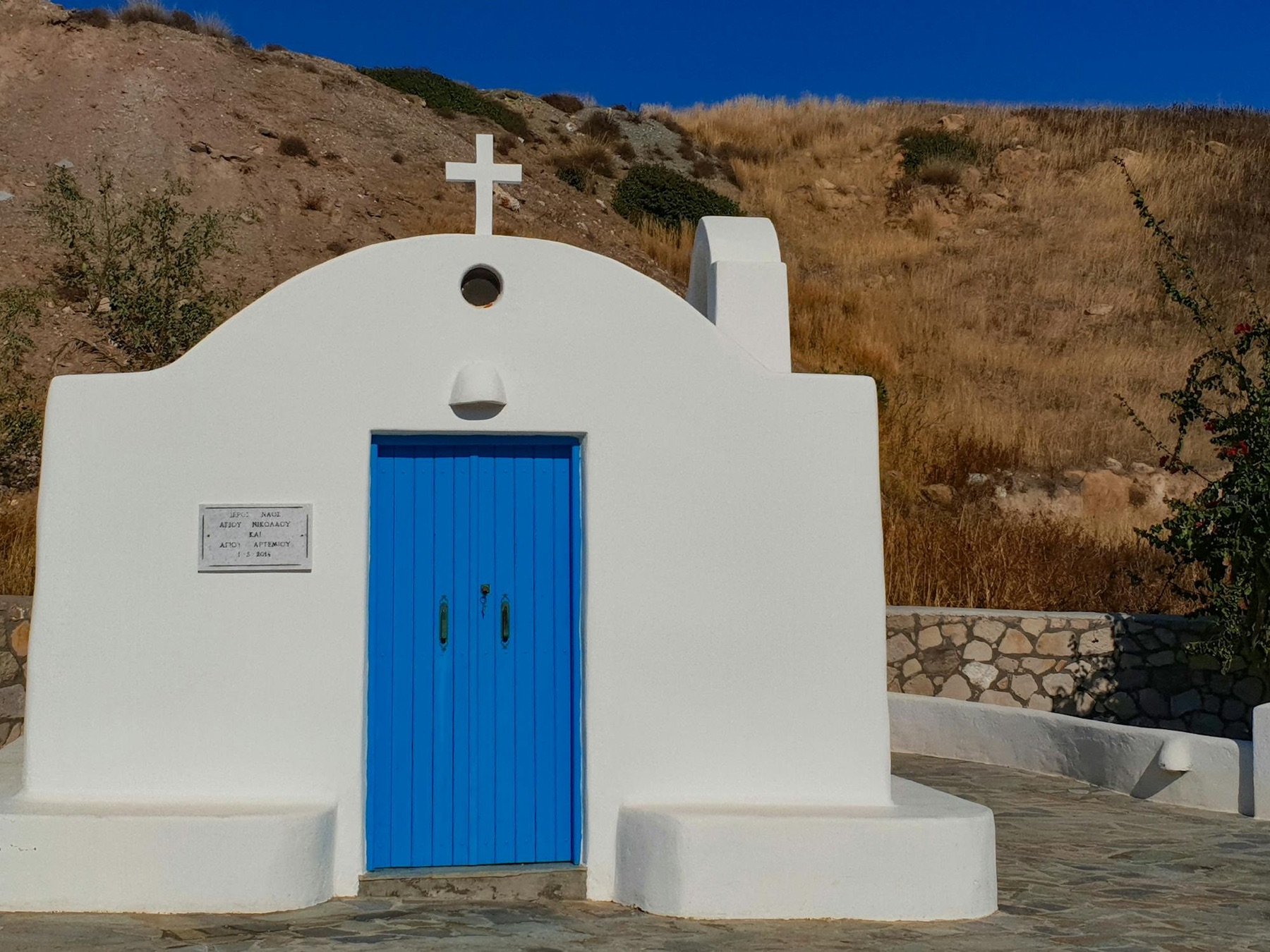
Chapels and monasteries — Sifnos counts more than 230 chapels for fewer than 3,000 inhabitants. The most famous is Chrisopigi, on a tiny rocky islet linked to the mainland by a footbridge, painted white against the cobalt sea. Visit at sunrise (no one there) or before sunset.
Panigyria — village saint-day festivals, with food cooked communally and offered to anyone who attends. The biggest are at Chrisopigi (40 days after Easter), the Prophet Elias monastery (20 July) and Panagia tou Vounou (8 September). We wrote a calendar of the festivals worth planning a trip around.
Practical things
- Currency: Euros. Most tavernas take cards, but small village tavernas may not — carry some cash.
- Driving: Roads are narrow, sometimes single-lane, often without barriers above the sea. Drive slowly. Sheep have right of way.
- Electricity: 220V, EU two-pin plugs.
- Internet: 4G across the island, fibre in the main villages, fast and reliable.
- Pharmacy: One in Apollonia, open daily 9am–2pm and 6pm–9pm.
- Health: One small medical centre in Apollonia. Serious cases are evacuated to Athens by helicopter.
- Language: Greek. English is widely spoken in tavernas and shops, French and Italian by some.
Where to stay
Sifnos has resisted large hotel development. Most accommodations are small — family-run guesthouses, boutique hotels with twelve rooms or fewer, and a small number of private villas.
The right choice depends on your travel style. For a couple’s short stay, a boutique room in Artemonas or a sea-front cottage in Faros is hard to beat. For families, friend groups, or anyone wanting space and privacy, a private villa is the better fit — and Sifnos has a small handful of beautifully restored stone houses that fit ten or twelve guests.
Villa Avlaki — our own house, on the cliffs above the eastern coast — is one of them. Five bedrooms, infinity pool, sea view from every suite, and a dedicated concierge to handle ferries, restaurant bookings, private chefs, and the small things that turn a trip into a memory. We rebuilt it stone by stone over three years with local artisans, and it is the home we hope to share.
A first-time itinerary
If this is your first trip and you have five nights, this is roughly how we would shape it:
- Day 1 — Arrival in Kamares around lunch. Lunch on the quay, swim, first dinner at the harbour.
- Day 2 — The three villages on foot: Apollonia → Ano Petali → Artemonas. Lunch in Artemonas, ceramic shop, dinner in Apollonia.
- Day 3 — Beach day on the south coast: Vathi or Platis Gialos. Long lunch at a beach taverna, swim, sunset back at the villa.
- Day 4 — Kastro in the morning, Chrisopigi at sunset. Dinner at Leonidas.
- Day 5 — Cheronissos for the day — the long drive north, the swim in the wild cove, the long lunch at the harbour.
Add a sixth day for a panigyri if your trip falls on a saint’s day. Add a seventh for a boat trip to Kimolos. Add an eighth because you will not want to leave.
If you are planning a trip and want help shaping it — the right ferries, the right week, the right table — write to us. We have lived this for years and we love passing it on.