Journal · Tradition
Easter in Sifnos: the deepest celebration in the Cyclades
Sifnos celebrates Easter with an intensity few Greek islands match. Whitewashed walls, mastelo in clay, the Epitaphios procession through Kastro, fireworks at midnight. A guide to the most extraordinary week of the Sifnian year.
Easter is the largest feast of the Orthodox calendar — larger than Christmas, larger than any other. And on Sifnos, it is celebrated with an intensity few Greek islands match. Here, day by day, is what happens — and why, if your week of holiday can be set on this one, you will carry home a memory of an entirely different kind.
Before Holy Week: the chiones
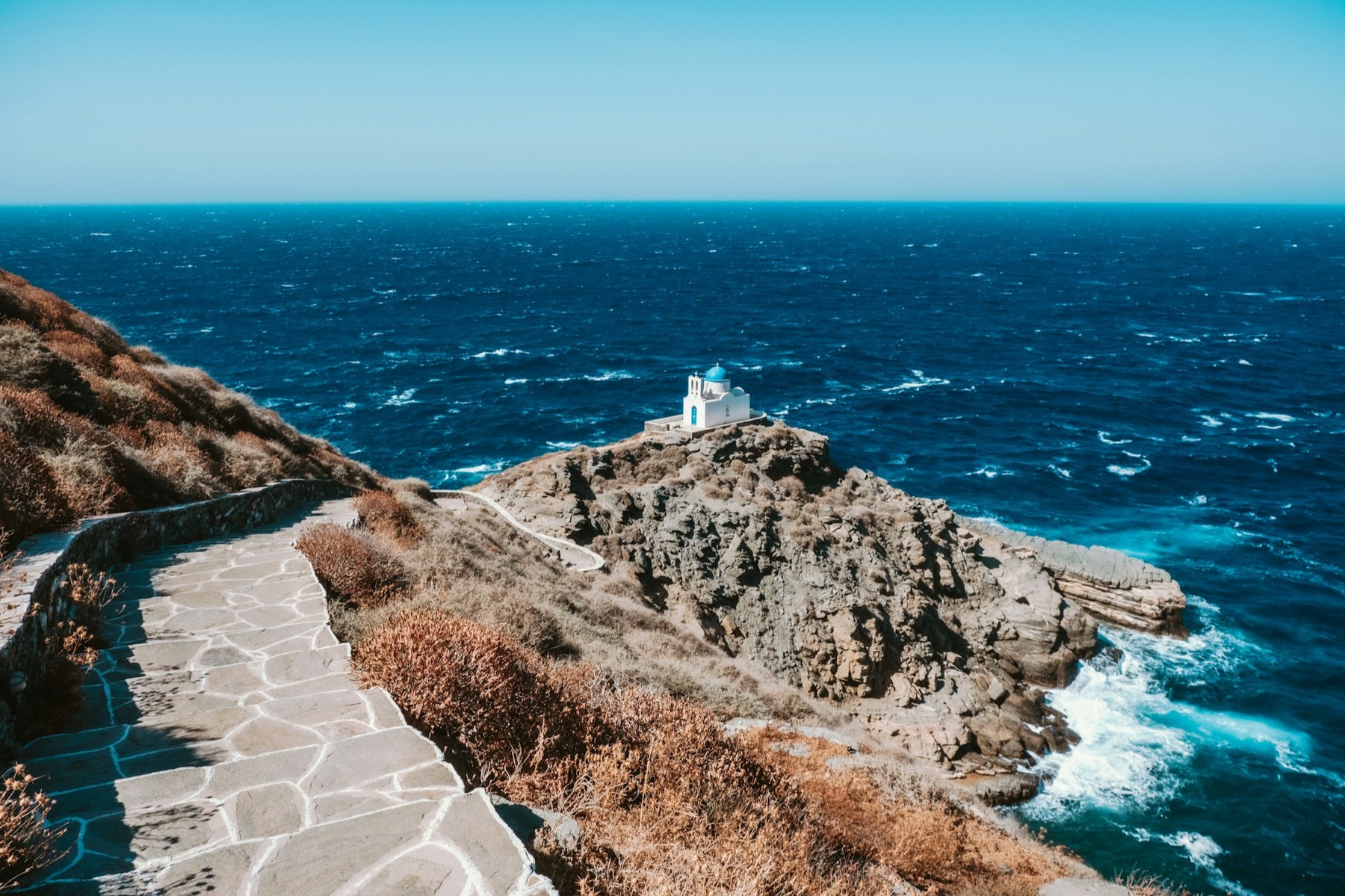
A few weeks before Easter, in the villages of the island, the women whitewash the houses. It is a tradition called chione — the snow-white ones. Volunteers and housewives repaint with lime the walls of houses and chapels, freshen the joints of the paved streets, touch up door lintels, whiten the edges of staircases and terraces.
The effect, in late March or early April, is striking. Sifnos appears literally luminous — every village recovers a snow-fresh whiteness, ready to receive the news of the Resurrection. It is one of the most beautiful visual moments of the island, regardless of the ceremony itself.
Monday to Wednesday of Holy Week
Holy Week begins in silence. The shops stay open but the sounds of leisure disappear — no music in the tavernas, few late evenings, an atmosphere of collected stillness that pervades everything.
This is the time when the household is prepared: shopping, eggs to be dyed red, koulourakia (small olive-oil biscuits) coming out of the oven, tsourekia (sweet braided breads with mahleb), and above all: the lamb or goat for the mastelo is chosen.
Holy Thursday
On the morning of Holy Thursday, in the village chapels, the Twelve Gospels of the Passion are read. In the evening, at home, the eggs are dyed. Tradition requires they be dyed red — the colour of Christ’s blood, but also of life returning. After the meal, each person chooses an egg and strikes it against another’s, saying “Christos anesti” — Christ is risen. Whoever’s egg remains unbroken wins the year’s luck.
It is also the day when the mastelo begins to be prepared — or rather, assembled. The cooking will come on Saturday.
Good Friday: the Epitaphios
Good Friday is the most solemn day of the week. In the morning, children go to gather flowers in the gardens and fields — poppies, daisies, rosemary, lilies — to decorate the Epitaphios, the bier of the dead Christ that will be carried in procession at evening.
At dusk, in every village, the Epitaphios procession leaves the church. The men carry the flower-laden bier, the faithful pass beneath it for blessings, the bells ring softly. At Kastro, the procession is particularly moving: it winds through the medieval lanes, passes under the vaulted loggias, crosses the tunnel-passages (stegadia), and descends to the two small chapels of the cemetery at the eastern edge of the cliff. The faithful carry candles, the scent of incense and flowers floats in the cool spring air. It is one of the most beautiful moments of the Greek year — and Kastro, by its natural setting, makes it one of the five or six finest processions in all of Greece.
At the end of the procession, the icon may be dipped towards the sea, in a gesture of blessing the waters. The faithful return home in silence. The night is long.
Holy Saturday: the mastelo, the resurrection
Holy Saturday is the day of the mastelo.
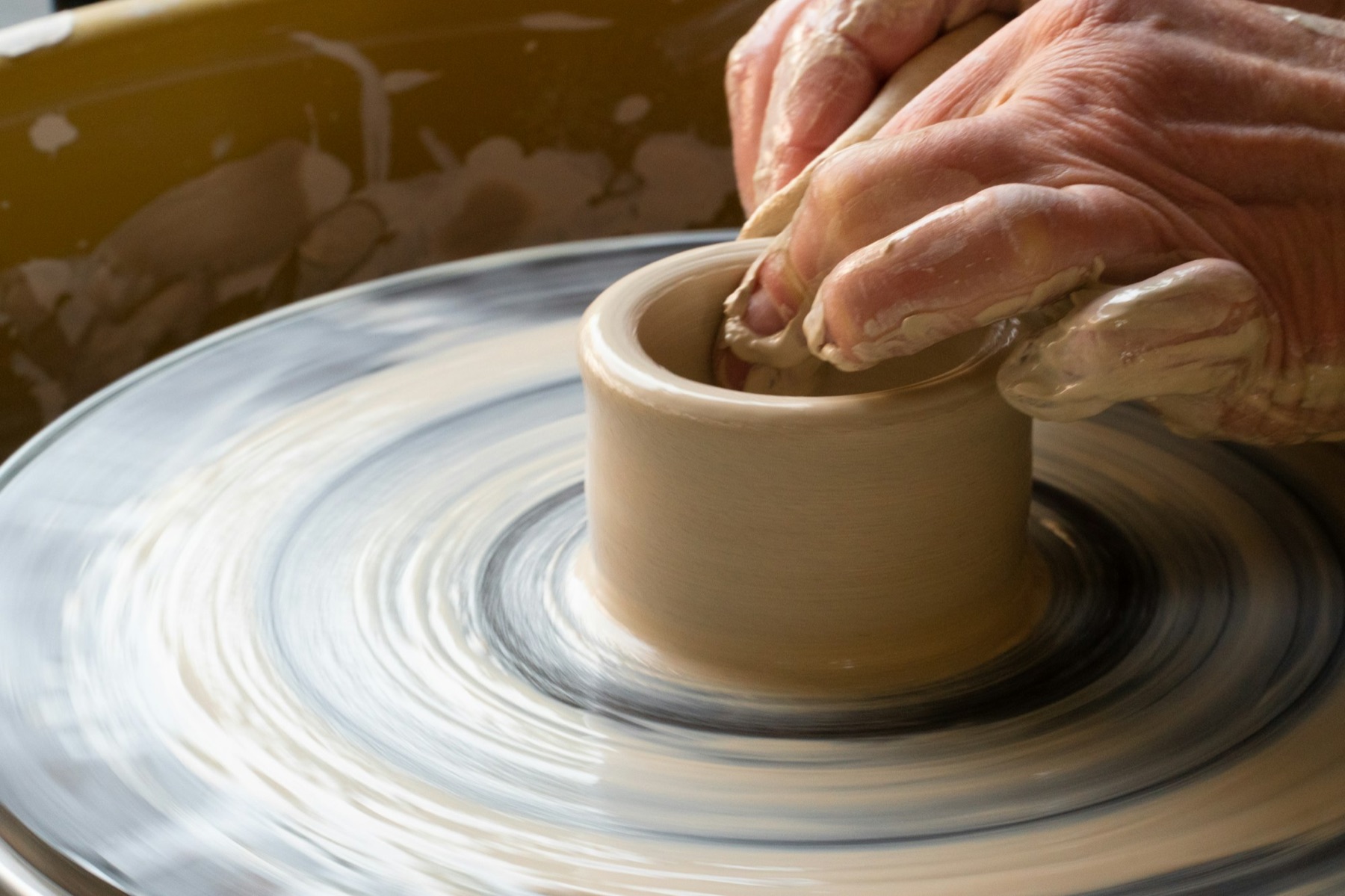
In every Sifnian house, the dish is prepared. Lamb or goat is cleaned, salted, scented with dill (anithos), poured over with red wine (never washed with water — that is critical), and laid on a bed of vine branches at the bottom of a large clay pot with a lid. The pot itself is called the mastelo — from the verb mastelono, “to seal.” The lid is sealed with bread dough to make the pot airtight.
In the afternoon of Holy Saturday, the village’s communal wood ovens are lit — the great wood-fired fournoi that have fed Sifnos for centuries. Each family deposits its mastelo. The pots will cook all night, on low heat, in the residual warmth of the oven. On Easter morning, they will be collected.
In the lanes of the island, as night falls, the smell of cooking mastelo begins to fill the air. Mixed with the scent of candles and church incense, it becomes the very smell of Sifnian Easter.
At 23:30, in every church on the island, the Resurrection liturgy begins. At midnight, the priest extinguishes all lights. Then he comes out of the iconostasis with the new flame and cries: “Christos anesti!” — Christ is risen! The faithful respond: “Alithos anesti!” — Truly He is risen!
At that exact moment, the sky over Sifnos lights up. Every parish, every village fires its fireworks. At Kastro, at Apollonia, at Artemonas, at Faros, at Kamares, at Vathi — the whole island explodes in light for five, ten minutes. It is one of the most memorable spectacles to be seen in the Cyclades. From the terrace of the villa, you literally see all of Sifnos light up.
After the fireworks, families return home. Candles are lit from the new flame brought from church. People eat magiritsa — the lamb-offal soup that breaks the fast — and wait for morning.
Easter Sunday: the feast
On the morning of Easter Sunday, families return to the fourno to collect their mastelo. The pot is opened on the family table — the smell that escapes is unforgettable. The meat, cooked twelve hours in its own juices, is tender enough to fall apart with a spoon. The dill, the red wine, the vine branches: a pure Sifnian perfume.
The meal stretches across the whole day. Red eggs, mastelo lamb, manoura cheese, caper salad, Sifnian wine. Families gather. Friends drop by. At each arrival, people embrace and say “Christos anesti” — the ritual greeting of the entire Easter week.
In some villages, the day continues with an Easter dance on the square — women in embroidered dresses, men in white shirts. It is rare today, but you can still find it at Artemonas and Apollonia.
Why come at Easter
Sifnos is beautiful in July. Sifnos is superb in September. But Sifnos at Easter is an island showing itself. The weather is still cool (15-20°C), the figs are in flower, the olive trees silvered, the light is exceptional. And above all, the Easter ceremony does something rare: it brings everyone together.
In July and August, the island receives its travellers — many and happy. At Easter, the island receives its own people — those from Athens who come back for Holy Week, those from Germany, those from Chicago. Sifnos becomes an extended village again.
The date of Orthodox Easter varies each year (it follows the Julian calendar): in 2026, it falls on 12 April. In 2027, 2 May. In 2028, 16 April. Book early — the Sifnian diaspora returns, hotels and villas fill quickly.
A few practical rules
The fast. Many Sifnians keep a strict fast during the forty days of Lent — no meat, no dairy, no oil on certain days. You are not obliged to follow it, but respect it if you are invited home. Tavernas adapt their menus accordingly.
The clothes. For processions and the liturgy, respectful dress — no shorts, no tank tops in churches. A shirt and long trousers are enough.
The language. Christos anesti (Christ is risen) — reply: Alithos anesti (Truly he is risen). Used throughout the Easter week and the days that follow.
The silence. On Good Friday, people speak softly, no celebration. The bars are closed. That is the tradition.
To go further:
- Three villages of Sifnos — especially Kastro, where the procession peaks
- The Sifnian calendar — the rest of the year’s dates
- A history of Sifnos — to understand why the island holds so tightly to its traditions
- Nikolaos Tselementes — the man who fixed Greek cuisine in books