Journal · History
A history of Sifnos: from the Delphi Treasury to the modern Cyclades
Six millennia on fifty square miles. From the gold mines that paid for a treasury at Delphi to the Venetian lords of Kastro, from Ottoman quietude to Greek independence — the story of a small island that often mattered more than its size.
Sifnos covers seventy-three square kilometres. A speck in the Aegean. And yet, more than once, the island has counted in Greek history — through its wealth, its geopolitical position, and its men. Six thousand years, slowed to one reading.
The age of mines (4,000 BCE — 5th c. BCE)
Sifnos has been inhabited since at least 4,000 BCE. The island lies at the heart of the Cycladic civilisation of the late Neolithic and early Bronze Age — those pre-Hellenic Aegean cultures whose marble idols now sit in the museums of Athens and New York.
But it was in the third millennium BCE that the island’s fortune was set: gold, silver and lead were mined here. For more than two thousand years, those deposits made Sifnos one of the richest islands in the Aegean. The most spectacular proof of that wealth still stands at Delphi: the Siphnian Treasury, built around 525 BCE.
The Treasury at Delphi
Greek city-states were in the habit of building, at the panhellenic sanctuary of Delphi, a small structure — the thésauros — to hold their offerings to Apollo. Sifnos wanted theirs more beautiful than any other. Herodotus and Pausanias both record that the Siphnians dedicated one-tenth of their mining revenues to building a treasury entirely of marble — the first such building on the Greek mainland.
Three marbles were used: Siphnian for the walls, Naxian for the entablature, Parian for the architrave and the sculpted decoration. The pronaos was supported not by columns but by two caryatids — female figures in stone, foreshadowing the better-known caryatids of the Erechtheion in Athens. To anyone wanting to understand the elegance of archaic Greece, the Siphnian Treasury is one of the buildings to see.
The end of the mines, the myth of punishment
By the late 6th century, the mines of Sifnos failed. Some galleries flooded — they had been dug below sea level. Geology alone explains the disaster; but the ancients saw it as divine punishment. Pausanias records the legend: the Siphnians, grown greedy, had stopped sending their tithe to Delphi. The angry god raised the sea.
True or not, the story says something about the island: Sifnos learned early never to forget its tributes.
The Persian Wars and the classical age
In the 5th century BCE, Sifnos joined the Greek alliance against Persia. The island was occupied by Persian forces before being liberated by Alexander the Great. It then entered the Hellenistic sphere, followed Rome (the three Roman sarcophagi still visible in the lanes of Kastro date from this period), and passed into the Byzantine orbit. Eighty Byzantine coins found at Kastro attest to a continuous population through the centuries.
Venetian Sifnos (1307-1617)
The event that durably reshaped the island was the Fourth Crusade (1204): Constantinople fell, the Byzantine Empire collapsed, and the Aegean islands passed under Latin rule.
In Sifnos, an Italian (or Catalan) Hospitaller named Januli I da Corogna seized power in 1307. The Da Corogna family ruled for a century. Around 1440, the island passed to the Gozzadini family of Bologna. The Gozzadini held Sifnos until the Ottoman conquest of 1617.
For three centuries, Sifnos was therefore a small Latin lordship — an archipelago of islands held by Italian families who had Hellenised but kept their Catholic faith. Its neighbours — Kythira, Naxos — had long since fallen to the Ottomans. Sifnos was one of the last Latin holdouts in the Aegean.
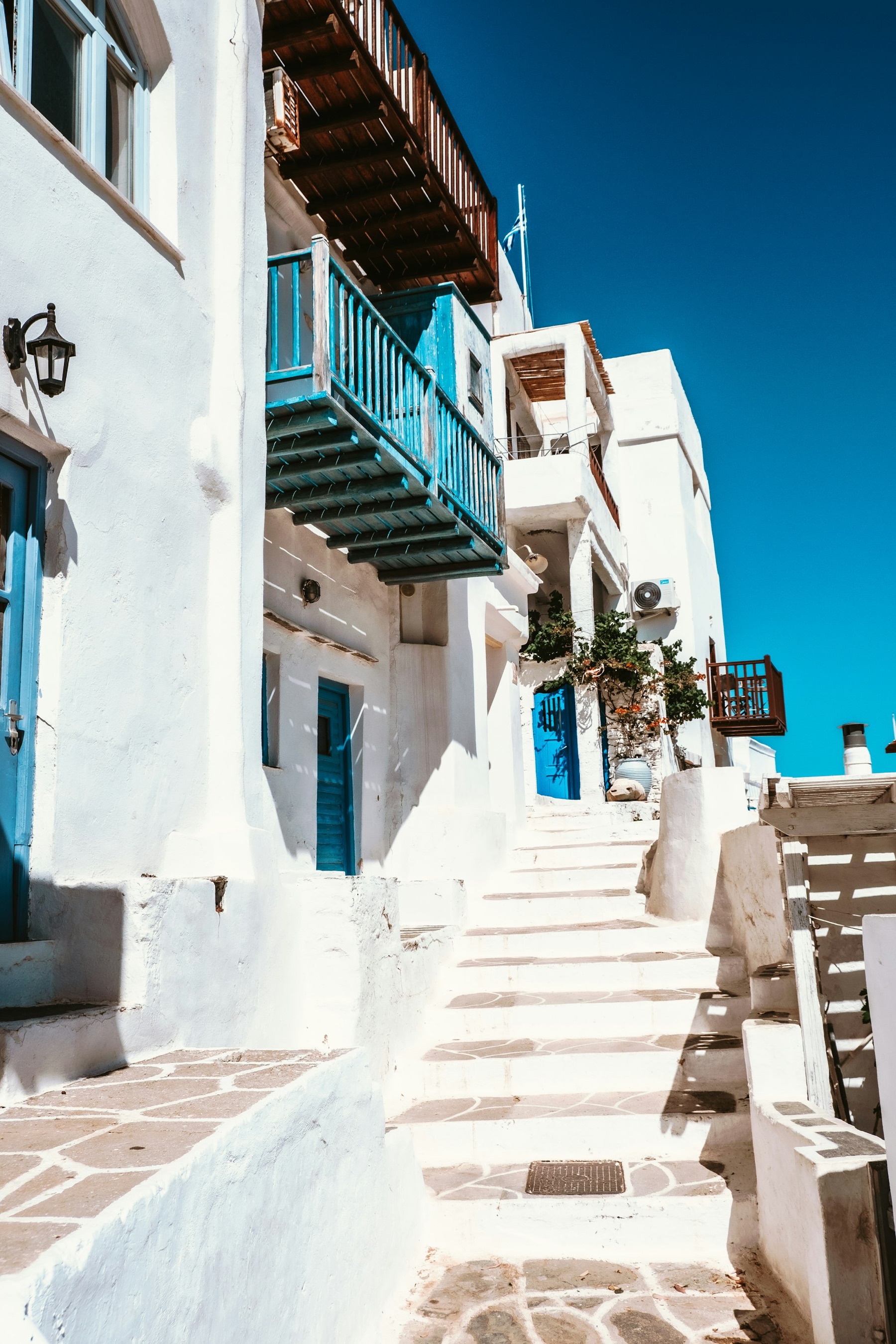
It is from this period that Kastro takes its present face: the fortified village on the eastern cliff, where the blank rear walls of the houses form the rampart, where one enters through vaulted passageways called loggias, and where stegadia — tunnel-passages — link the lanes. A few houses still bear carved Venetian coats of arms above their lintels.
Under the Ottomans (1617-1821)
The Ottoman conquest was, unlike on other islands, relatively light at Sifnos. Authority consisted essentially of tax collection; the islanders administered their own affairs.
It was also under Ottoman rule that a uniquely Sifnian institution was born: the Scholi tou Aghiou Tafou — the School of the Holy Sepulchre — founded in 1687 at Kastro. While mainland Greece felt the full pressure of Ottoman authority, this school became one of the few centres of Greek learning in the Aegean. It trained generations of clergymen, scholars and educators who would go on to play roles in the new Greek state.
By the early 17th century, despite everything, Sifnos had become a significant commercial centre — small, but prosperous.
The War of Independence (1821)
When the Greek War of Independence broke out in 1821, Sifnos played a role larger than its size would suggest. The island provided men, ships and finance. Several Sifniotes trained at the School of the Holy Sepulchre became figures of the new Greek state — among them Nikolaos Chrysogelos (1780-1858), the future Minister of Education.
In 1836, under King Otto, the first king of Greece, the island’s capital was moved from Kastro to Apollonia. That administrative shift marked the end of Sifnian medieval history and the beginning of its modern era. Kastro lost its official function; it kept its medieval beauty.
The century of Tselementes (20th century)
By the turn of the 20th century, Sifnos had become what it still is: an island of potters and cooks. Sifnian pottery — tsoukalia, mastela, flara — was exported across the entire Aegean; the Greek word Σιφνιός (Sifniot) became almost a synonym for potter.
It was also in those years, in 1878, that one Nikolaos Tselementes was born in the hamlet of Exambela. He would become the greatest modern Greek chef, the author of the Greek cookbook that codified national cuisine in 1932, and his name itself — tselementes — would pass into the Greek language as a synonym for cookbook. For more, see our Tselementes biography.
Sifnos today
The island has stabilised at around 2,777 permanent residents (2021 census). Tourism — recent, more measured than at Mykonos or Santorini — complements the traditional activities: fishing, agriculture, pottery, cuisine, craftsmanship.
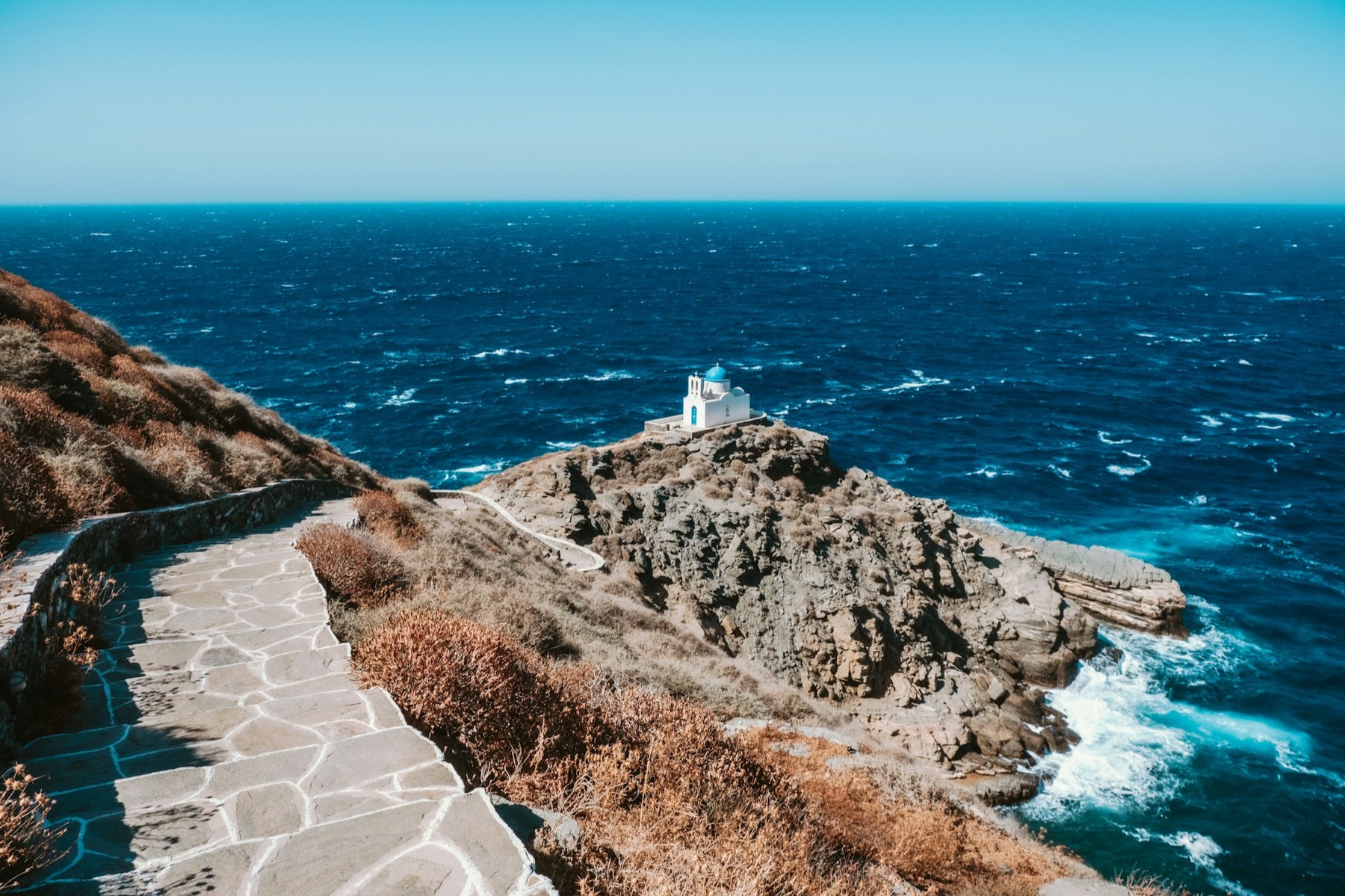
Sifnos has never become what it should not have become. The villages are still human-scaled. The rhythm is still Greek. The wood ovens still light on Saturday nights with their tsoukalia of revithada. The chapels are still whitewashed for Easter by the chiones. And the meltemi — the north wind — still sweeps the terraces as it did when the Da Corogna watched from the ramparts of Kastro.
The history of Sifnos is a little of all that: greater than its weight, faithful to its gestures, and more intact than most of its neighbours.
To go further: